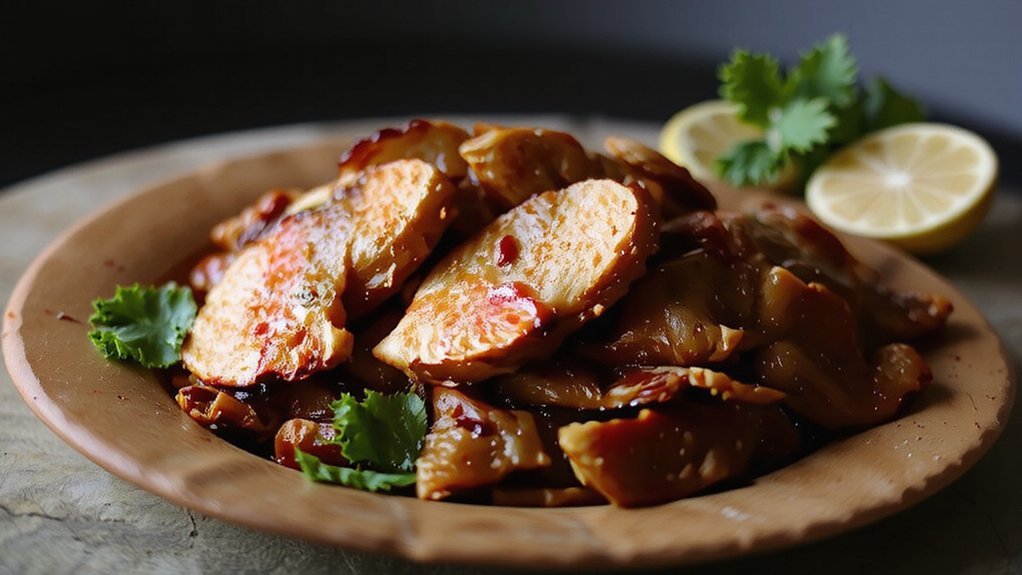
You’ll transform well-marbled pork shoulder into bold, citrus- and garlic-scented carnitas by searing seasoned cubes, pressure-cooking them with orange, lime, cumin, oregano and a bay leaf, then shredding and crisping the meat for caramelized edges. You’ll taste savory depth and bright acidity in every bite — here’s how to get perfectly tender, crunchy carnitas every time.
Key Takeaways
- Use well‑marbled pork shoulder, trimmed and cut into 2–3‑inch cubes for even cooking and optimal shredding.
- Dry, then rub with kosher salt, pepper, cumin, oregano, minced garlic and orange zest for authentic citrus‑herb flavor.
- Sear on Instant Pot sauté to develop a crust, then deglaze with chicken stock and a splash of orange or cola.
- Pressure‑cook on high about 45 minutes, target 195°F internal temperature, then use natural or controlled release before shredding.
- Shred, toss with reserved juices, crisp in a hot skillet or under the broiler, and serve with tortillas and fresh garnishes.
Ingredients
Pork shoulder (Boston butt) is the backbone here — choose a well-marbled 3–4 lb piece for tender, flavorful carnitas. You’ll build bold flavor profiles with citrus (orange plus lime), garlic, cumin, oregano, bay leaf, and a touch of smoked paprika. Add a splash of cola or beer for caramel notes, and use orange zest rather than juice alone to lift brightness. Don’t skimp on salt; it’s the catalyst that amplifies texture and seasoning. If possible, prioritize local sourcing: heritage pork or sustainably raised cuts will change mouthfeel and depth. You’ll balance acid, sweet, savory, and smoke for modern riffs on tradition, and you’ll keep ingredients purposeful so each element earns its place in the bowl. You can vary chiles to experiment with layered heat.
Equipment and Prep
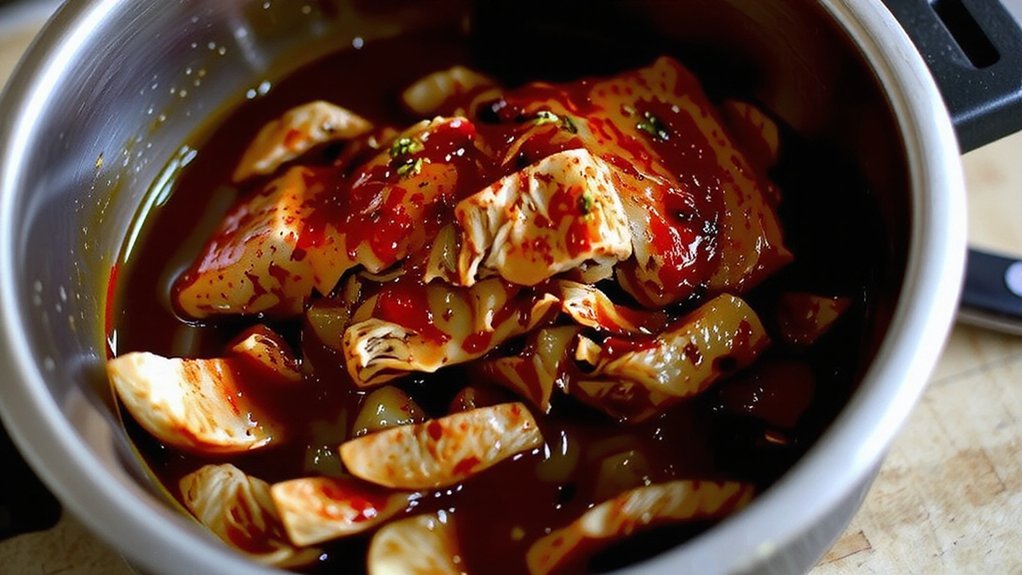
You’ll need a 6-quart Instant Pot (or similar) plus the inner trivet and a sharp knife to get the right sear-and-shred texture. Trim and cube the pork shoulder into even pieces so seasoning penetrates and it cooks uniformly. Toss the meat with salt, pepper, cumin, orange zest and garlic to lock in bright, savory carnitas flavor before pressure cooking.
Instant Pot Essentials
While a good Instant Pot makes the job faster, what really matters are the right tools and smart prep: use a 6‑ or 8‑quart electric pressure cooker with the stainless‑steel inner pot and a fresh silicone sealing ring, a metal trivet for raising meat, reliable tongs, a sharp chef’s knife, and measuring spoons for precise spices. You’ll master Pressure basics and follow Safety protocols to harness steam, control doneness, and protect flavor. Use the table below to organize gear and intent.
| Tool | Purpose |
|---|---|
| InstantPot | Even,fastbraise |
| Trivet&tongs | Lift,sear,finish |
Prep smartly: degrease liquid, monitor seal, preheat on sauté to develop crust before pressure cooking. Innovate with aromatics in the pot, layer liquids for glaze potential, and test release methods to vary texture. Track times, adapt heat, repeat, refine regularly.
Cutting and Seasoning Prep
Trimming and portioning your shoulder sets the stage for deep, concentrated flavor, so work with a sharp chef’s knife on a stable cutting board and cut the meat into 2–3‑inch chunks to expose more surface for seasoning and browning. Scan the grain direction and, when you want pullable shreds, cut across it for tender strands after cooking; if you prefer chunkier pulls, leave some pieces against the grain. Pat pieces dry, then mix kosher salt, cracked black pepper, ground cumin, oregano, minced garlic, and a touch of orange zest so your rub sings. Apply the rub evenly, pressing for full seasoning distribution into crevices. Chill briefly to let flavors settle. Use tongs and a wide spoon when transferring to the Instant Pot. Finish confidently.
Step-by-Step Instant Pot Method
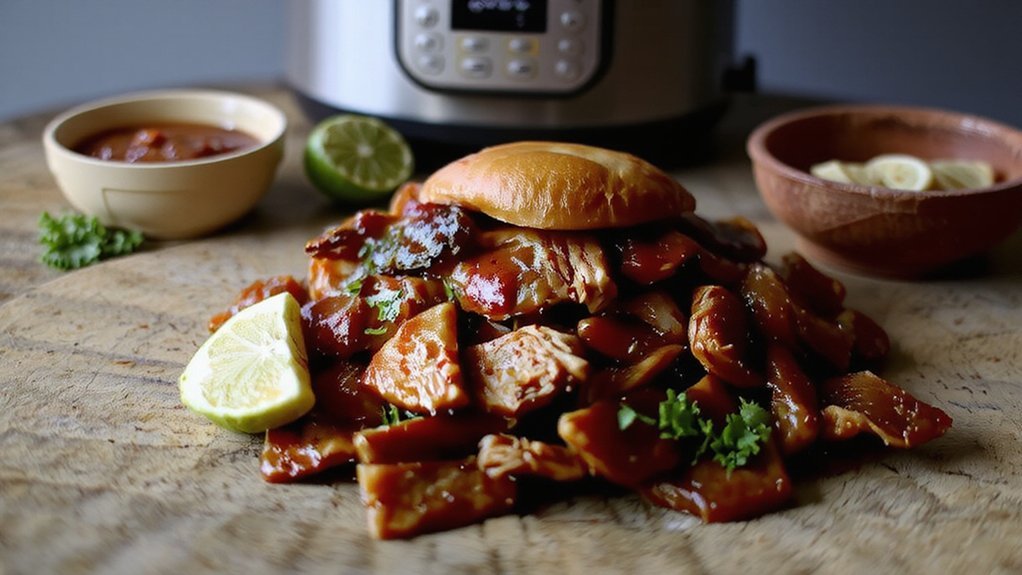
After you sear and season the pork, the Instant Pot does the heavy lifting—it’s pressure and aromatics that infuse cumin, orange, and garlic into every shred, yielding tender, richly flavored carnitas ready for quick shredding and crisping. You’ll add onions, bay leaves, a splash of citrus and chicken stock, lock the lid, program high pressure about 45 minutes, adjusting for thickness. Use sequence optimization: sauté, deglaze, then pressure to concentrate flavors and prevent burning. When pressure releases, transfer meat to a tray to rest while you skim juices. Taste and adjust acidity, salt and heat; more orange brightens depth. For precision, use temperature monitoring to confirm pork reaches at least 195°F for shredding. Shred with forks, toss gently in reserved juices, and serve hot.
Browning and Crisping the Carnitas
Now that the pork’s been shredded and tossed with its cooking juices, make the crisped exterior your flavor anchor—crisping concentrates the orange, garlic, and cumin into caramelized edges that contrast the tender interior. Heat a heavy skillet or sheet pan under high heat, drain excess liquid but keep rendered fat; that fat rendering is your tool, not waste. Spread meat in a single layer so surface moisture evaporates quickly and the Maillard reaction will sing. Don’t overcrowd, and flip occasionally to develop deep mahogany patches. For innovation, finish with a quick broil or a blowtorch to target high-heat spots. Taste as you go; adjust salt, a squeeze of citrus, or a pinch of chile to sharpen the browned flavors before plating with bold restraint.
Serving Suggestions and Toppings
You’ll want warm corn tortillas or crisped taco shells to carry the rich, citrusy, herb-studded carnitas. Top with bright garnishes — chopped cilantro, diced white onion and lime wedges — to cut the fat and amplify the pork’s charred edges. Add salsas from tangy tomatillo verde to smoky chipotle roja for layered heat and acidity that balance the meat.
Tortillas and Shells
Start with warm, lightly charred corn tortillas for the clean, slightly sweet canvas that lets the carnitas’ crisped edges and citrusy brightness sing. You’ll respect tortilla origins while exploring shell varieties—hand-pressed corn, lard-tenderized flour, and innovative blue or hoja santa wraps. Choose shells that balance fat, acidity and texture so each bite layers crunch and succulence. Heat, press or toast to coax oils and char. Build tacos, tlayudas or bowls with shells that carry juices without collapsing. Use the table below to compare structure, flavor and best-use.
| Shell | Texture | Best use |
|---|---|---|
| Hand-pressed corn | Tender, slightly chewy | Classic tacos |
| Flour (lard) | Pillowy, sturdy | Folded burritos |
| Blue/creative wraps | Earthy, visual | Modern plates |
Press shells briefly before serving to amplify aroma and guarantee structural integrity every time.
Garnishes and Salsas
Balancing citrus, heat and crunch transforms carnitas from great to unforgettable: squeeze bright lime over crisped edges, scatter chopped white onion and cilantro for bite and herbaceous lift, and add thin-sliced radishes or pickled red onions for peppery snap. Top with guajillo-chile salsa for smoky warmth, or experiment with green tomatillo salsa for acid lift; think Regional Salsas as design choices, not afterthoughts. Layer creamy avocado or cotija for richness, and finish with micro cilantro or scallions for freshness. Prioritize Texture Contrasts: crunchy tortillas, silky pork, and pulpy salsa. You’ll calibrate heat with chile de arbol flakes or a grapefruit-habanero jam. Serve family-style so people combine elements themselves — that creative assembly is where modern carnitas sing. Keep garnishes vibrant, balanced, and surprising always.
Storage and Make-Ahead Tips
If you want the meat to stay juicy and flavorful, cool it quickly and refrigerate in a shallow, airtight container within two hours. For Freezing portions, label servings with date and sauce ratio; vacuum-seal or wrap tightly to prevent freezer burn. Follow clear Reheating guidelines: thaw overnight in fridge, reheat gently with a splash of stock to revive fat and aromatics, finish under a broiler or in a hot skillet for crisp edges. Plan make-ahead bowls: cook once, portion, and innovate through different citrus, chile, or herb finishes. Store refrigerated carnitas 3–4 days; frozen up to 3 months.
| Action | Time | Tip |
|---|---|---|
| Refrigerate | 2 hours | Shallow airtight |
| Refrigerated | 3–4 days | Add stock to reheat |
| Frozen | up to 3 months | Broil for crisp finish now daily |
Conclusion
You’ll find these Instant Pot carnitas deliver tender, citrus-bright pork infused with garlic, cumin, oregano and bay leaf, and finished with caramelized edges for textural contrast. Sear the seasoned shoulder, pressure-cook with orange, lime and a splash of stock or cola, then toss shredded meat in reduced juices before crisping. You’ll serve intensely flavored, ingredient-forward carnitas that stand up to bold toppings and make weeknight tacos taste like celebration every time, without any fuss whatsoever.